Intersectional Identities and Inclusive Education: Exploring the Experiences of Students with Disabilities from Diverse Marginalized Groups at the University of Ghana
Identités intersectionnelles et éducation inclusive : explorer les expériences d’étudiantes et d’étudiants handicapés issus de divers groupes marginalisés à l’Université du Ghana
Joseph Sasu Kwame, Doctoral Student
Department of Adult Education and Human Resource Studies
School of Continuing and Distance Education, University of Ghana
Simon-Peter Kafui Aheto, DTech, Esq.
Associate Professor, School of Continuing and Distance Education
University of Ghana
saheto [at] ug [dot] edu [dot] gh
Abstract
This study employed an intersectional qualitative approach to explore experiences of discrimination among university students in Ghana who have disabilities intersecting with other marginalized identities based on gender, ethnicity, and socioeconomic status. Through in-depth interviews and focus group discussions with 9 participants from the University of Ghana, the research uncovered how overlapping systems of oppression around disability, class, ethnicity, and gender synergistically disadvantage these students, compromising access, affordability, social relationships, and overall inclusion within contexts aimed at furthering participation rights. Key findings include the “narrative of hierarchies” within the disability community itself, the intersectional impact of economic status on access to assistive technologies and accommodations, and the compounded challenges faced by women and ethnic minorities with disabilities in inclusive education efforts. Despite progressive policies, persistent gaps at intersecting identity locations expose limits of current structures and supports. The study contributes contextualized knowledge on intersecting equity issues in Ghanaian higher education and calls for transformative, intersectional strategies to challenge ableism alongside other biases and to build radically equitable academic communities. The research recommends to the university to deliberately adopt an intersectional strategy that surpasses individual adjustments for specific issues to enhance inclusive education.
Keywords: Intersectionality, Disability, Inclusive Education, Discrimination, Higher Education, Ghana
Résumé
Cette étude a adopté une approche qualitative intersectionnelle pour analyser les expériences de discrimination vécues par des étudiantes et étudiants universitaires handicapés au Ghana, dont le handicap s’entrecroise avec d’autres identités marginalisées liées au genre, à l’ethnicité et au statut socioéconomique. À partir d’entrevues approfondies et de groupes de discussion menés auprès de neuf participantes et participants de l’Université du Ghana, la recherche montre comment les systèmes d’oppression imbriqués (handicap, classe sociale, ethnicité et genre) se renforcent mutuellement et désavantagent ces étudiantes et étudiants. Ces dynamiques compromettent l’accès, l’abordabilité, les relations sociales et, plus largement, l’inclusion dans des espaces censés soutenir leurs droits de participation. Les résultats révèlent notamment un « narratif de hiérarchies » au sein de la communauté des personnes handicapées, l’impact du statut économique sur l’accès aux technologies d’assistance et aux accommodements, ainsi que les défis cumulés auxquels font face les femmes et les personnes issues de minorités ethnoculturelles handicapées dans les efforts d’éducation inclusive. Malgré des politiques progressistes, des lacunes persistantes aux intersections identitaires exposent les limites des structures et soutiens actuels. L’étude apporte un éclairage contextualisé sur les enjeux d’équité intersectionnelle dans l’enseignement supérieur ghanéen et appelle à des stratégies transformatrices pour combattre le capacitisme conjointement avec d’autres biais, afin de bâtir des communautés académiques véritablement équitables. Elle recommande que l’université adopte une stratégie intersectionnelle dépassant les ajustements individuels ciblant des enjeux isolés afin de renforcer l’éducation inclusive.
Mots-clés : Intersectionnalité, handicap, éducation inclusive, discrimination, enseignement supérieur, Ghana
Introduction
Despite global efforts to promote inclusive education, students with disabilities who also belong to other socially excluded groups remain particularly vulnerable and underserved (Anderson, 2023). The intersection of disability with factors such as gender, ethnicity, socioeconomic status, and geographic location creates compounded barriers to education that are often overlooked in conventional approaches to inclusion (Amjad et al., 2023; Pincock et al., 2023). In the Ghanaian context, these intersectional challenges are further complicated by local factors including ethnic affiliations, religious beliefs, and rural-urban divides (Gbagbo et al., 2023). However, the specific burdens faced by students at these crucial intersections remain underexplored in Ghanaian scholarship and policy discussions.
The objective of this study is to explore the depth and complexity of discrimination experienced by University of Ghana students who inhabit multiple marginalized identities within the context of inclusive education. This research contributes to a growing body of literature on intersectionality in education, offering a varied understanding of how various forms marginalization interact and compound in the lives of students with disabilities in Ghana and beyond. Understanding compounded equity barriers for students with layered marginalized identities has several important implications. First, it can inform practical improvements to disability services, inclusion protocols, diversity training, policymaking, and outreach (Khuder & Petric, 2023) to better serve students facing interconnected struggles in Ghanaian universities. Second, by documenting the true depth of challenges these students endure, it compels institutions and policymakers to consider how systems perpetuate overlapping marginalization (Khuder & Petric, 2023). Finally, giving voice to students’ lived experiences provides knowledge otherwise overlooked by conventional scholarship and discussions on inclusion and disability in Ghana.
Literature Review
Disability-Based Discrimination
Classification of disabilities could be complex. The International Classification of Functioning, Disability, and Health (ICF) emphasizes the multidimensionality and dynamic nature of disabilities, encompassing various factors like individual functioning, social barriers, quality of life, and human rights (Brehaut & Kohen, 2016). However, the disability types considered herein covered only the disability cases reported in the school’s database. This includes physical impairment which limits an individual’s mobility, dexterity or physical functioning; sensory impairment which affects one or more of the senses such as vision and hearing; and orthopaedic impairment which affects an individual’s musculoskeletal system, resulting in limitations in mobility and dexterity.
Discrimination against students with disabilities in education has been extensively documented across contexts. Globally, research has uncovered patterns of marginalization through segregated schooling (Beach & Sernhede, 2011), restrictive access to facilities and opportunities (Messiou, 2019), social stigma, lowered expectations, and normalized exclusion in academic institutions (Baker, 2019). These patterns are influenced by social positioning and ingrained group social norms (Simatele, 2022). These reflect broader ableist societal attitudes that position disability as inherently inferior, undesirable, and incompatible with mainstream school participation (Gabel & Miskovic, 2014). Prejudice in classrooms and on campuses persists due to unfavourable attitudes, lack of accommodations and supports, inaccessible buildings and transportation, and other environmental issues (Hussain, 2023; Killen & Rutland, 2022; Mutanga & Walker, 2017).
Intersecting Barriers to Inclusive Education
The principles and practices of inclusive education have sought to challenge the structures, systems, and norms that propagate this discrimination. However, students with disabilities who hold other marginalized identities remain vulnerable and underserved amid broader inclusion efforts (Anderson, 2023). Race, gender, socioeconomic status, ethnicity, language, sexual orientation, refugee status, and other attributes intersect with disability to compound experiences of oppression for these students (Amjad et al., 2023; Pincock et al., 2023). Their needs and barriers to education thus require specific attention, which this study aims to provide through in-depth exploration of their lived experiences (Brusnahan et al., 2023). Examining intersectional disability discrimination can inform practical advancements in equity and social justice across educational contexts (Walton, 2022).
Students with disabilities in Ghana face long-standing challenges accessing quality education and participating equally in academic environments (Asamoah et al, 2023). Discrimination on the basis of disability intersects with other attributes in the Ghanaian context, including ethnic affiliation, religion, gender roles and identity, rural-urban divides, and socioeconomic status (Gbagbo et al., 2023). This creates layers of marginalization and disadvantage for students from groups experiencing multiple oppressions. For example, girls with disabilities from rural northern regions of Ghana may contend with the stigma of gender norms, disability, and geographic peripherality (Awinpoka Akurugu, 2021). Students with sensory or physical impairments belonging to certain ethnic minority groups may also face language barriers and cultural differences hindering inclusion in schools. These interconnected equity issues compromise inclusive education policies meant to support all learners.
Conceptual Framework
Intersectionality theory, rooted in Black feminist scholarship, highlights the interconnectedness of various identity axes, such as race, gender, class, and disability, and how they collectively shape experiences of oppression and disadvantage (Crenshaw, 1989). In the context of higher education, applying an intersectional framework allows for a varied analysis of the compounded challenges faced by students with multiple marginalized identities, particularly those with disabilities. Recent studies have increasingly focused on the intersection of disability with other forms of marginalization in higher education, emphasizing the need to move beyond simplistic, one-dimensional perspectives. For instance, research by Ndlovu (2019) in South Africa has shown how the intersection of disability with race, class, and colonial legacies exacerbates barriers to accessing professional degrees. Similarly, Bešić (2020) argues that an intersectional approach is crucial for promoting inclusive education, as it addresses the diverse needs of students who experience layered forms of disadvantage. In their systematic review, Nichols and Stahl (2019) note the need to adopt a more thorough intersectional approach when examining the educational experiences of marginalised students in the African context, especially those with intersecting identities such as disability and socio-economic disadvantage.
Our research is based on the principles of critical disability theory (CDT), which requires us to closely examine the interconnectedness of ableism with other kinds of systemic oppression that originate from patriarchy, racism, and colonial legacies within Ghanaian culture. This intersectional approach aligns closely with Afrocentrism, which emphasizes the importance of understanding the experiences of African people within their specific socio-cultural and historical contexts. Similarly, African feminism provides a framework for understanding how gender and race intersect with disability, particularly in post-colonial African societies, where the legacies of colonialism and patriarchy continue to shape the lived realities of women with disabilities. The adoption of a critical disability lens compels us to go beyond surface-level accommodations and instead envision a profound transformation of the university as a setting that actively opposes the interrelated systems of oppression (Ingham, 2018). By incorporating Afrocentrism and African feminism, we situate CDT within a broader understanding of how intersecting identities and systems of oppression interact in the African context, particularly in higher education.
Our goal is to use an Afrocentric, contextually relevant critical perspective to expose the extent of intersectional marginalization experienced by students and guide efforts to create genuinely inclusive academic communities. This perspective highlights the social construction of disability, illustrating how ableism, compounded by racism and patriarchy is culturally and historically situated within African contexts. By focusing on African feminisms and underrepresented identity categories such as ethnicity, this viewpoint can uncover the suppressed stories of marginalization (Baker, 2019). Additionally, it can demonstrate how societal disparities, influenced by prevailing norms of the dominant group, erect obstacles for persons who experience multiple marginalizations, such as Africans with disabilities (Ndlovu, 2019).
Critical theory offers essential conceptual tools for researching the power relations that support ableism and intersectional oppression (Kissi, 2018). It requires examining how disability interacts with patriarchal, racist, colonial, and capitalist ideology in academic settings (Hall, 2019). This aligns with CDT’s emphasis on power and inequality, where the focus is on how societal structures maintain the dominance of able-bodied norms, reinforcing the marginalization of those with disabilities. This lens goes beyond moderate efforts to inclusion and aims for more radical reconceptualization of universities as places for challenging interconnected systems of marginalization. Thus, incorporating Afrocentrism and African feminism within CDT provides a culturally and contextually relevant framework for understanding how these systems of oppression function in African higher education settings. Examining how different aspects of identity connect might provide a deeper understanding of how systematic oppression operates. It sheds light on both overlapping marginalization and paths for liberating resistance (Hall, 2019).
This study therefore analyzes how intersectional ableist oppression is influenced by larger socio-political, economic, and historical systems of dominance, and does so by combining critical disability theory within an intersectionality framework. Ensuring justice for a variety of university students with disabilities requires an intersectional critical paradigm. By integrating Afrocentrism and African feminism, we highlight how the interconnectedness of different forms of oppression can be understood through a culturally grounded lens that is specific to the African context. This approach combines many perspectives to generate knowledge and take empowered action to fundamentally change the university's deeply rooted systems of oppression. We aim to enhance the possibilities for liberation through our efforts.
Methodology
Sample Procedure
This study employs an intersectional, qualitative case study approach to examine the experiences of discrimination among university students with disabilities at the University of Ghana, who also possess other marginalized identities. To ensure a diverse representation of intersectional identities, 9 participants, including students and a staff member, were purposively selected. Eligibility criteria included being a current student or staff member at the University of Ghana with a disability and belonging to at least one other marginalized group. Participants were recruited through the university’s disability services office and snowball sampling. These participants reflect a range of perspectives across gender, ethnicity, educational levels, and socioeconomic backgrounds.
Characteristics of Respondents
The study was conducted at the University of Ghana, a significant academic institution in the region, providing a rich context for exploring the intersectional experiences of marginalized students within higher education. The participants elicited varying levels of socioeconomic status ranging from lower- to middle-income levels and ethnic groups. Participants include individuals with hearing impairments (HI), visual impairments (VI), and physical challenges (PC), with a total of 4 male and 5 female participants. A visually impaired staff member, who also serves as a lecturer and counsellor for students with disabilities, was included due to his deep understanding and personal experiences relevant to the phenomenon under investigation.
|
Gender |
Male |
Female |
Total |
||
|
Socio-Economic Status Recorded |
Lower Income Status |
Middle Income Status |
Lower Income Status |
Middle Income Status |
|
|
Disability Types |
|
|
|
|
|
|
Hearing Impairment (HI) |
1 |
|
1 |
1 |
3 |
|
Visual Impairment (VI) |
|
1 |
2 |
|
3 |
|
Physically Challenged (PC) |
|
1 |
1 |
|
2 |
|
Staff (VI) |
|
1 |
|
|
1 |
|
Total |
1 |
3 |
4 |
1 |
9 |
Data Collection Methods
In-depth semi-structured interviews were the primary data collection method, with each interview lasting between 45 to 60 minutes. These interviews were conducted both virtually and face-to-face, allowing for flexibility and inclusivity in the data-gathering process. To validate and corroborate the findings from these interviews, a focus group discussion was also conducted virtually among six participants. The interview questions were open-ended, designed to encourage participants to share their personal experiences concerning their disability, gender, ethnicity, and socioeconomic status, as well as how these factors intersect. Additionally, these questions elicited participants’ perspectives on inclusion, support systems, and equity on campus. Six interviews were audio recorded, while three were video recorded for the hard-of-hearing participants.
Sample questions included: how do you describe your disability/disabilities? How do you identify in terms of other aspects of your identity? What disability-related challenges or discrimination have you faced? How do you describe your disability/disabilities and the challenges you face related to your disability? How do you identify in terms of other aspects of your identity beyond disability, such as gender, ethnicity, socioeconomic status, or any other relevant identities? Have you experienced additional challenges tied to other identities like gender, ethnicity, socioeconomic status intersecting with disability? Do you feel there is a hierarchy or perceptions that some disabilities are viewed as more legitimate than others? How can disability services and communities be more inclusive of the diversity within disability populations? Terminology such socioeconomic status, inclusiveness, and intersectionality, hierarchical perceptions was explained to participants. All interviews were later transcribed.
Data Analysis
Thematic analysis using the intersectionality framework was applied to uncover themes pertaining to structures and marginalization. The analysis also considered the heterogeneity between participants with differing intersectional identities. The researchers took time to read and re-read the transcripts to familiarize with the data. Themes were generated through an iterative process of open coding, axial coding, and selective coding, aligning with the approach suggested by Collins and Bilge (2016) for intersectional analysis. Initial codes were grouped into categories, which were then refined into overarching themes that corresponded with the research questions and reflected the “matrix of domination” concept (Collins & Bilge, 2016). The intersectional framework guided our analysis by focusing on how multiple identity categories (disability, gender, ethnicity, socioeconomic status) interact to create unique experiences of discrimination and marginalization. For each step, the corresponding researchers mutually agreed to ensure intercoder reliability.
As part of a project work in a PhD program, ethical approval for the research was obtained from the Ethics Committee for Humanities of the University of Ghana. Informed consent was gained from all participants, emphasizing voluntary participation, privacy protections, and the right to withdraw. To ensure that the identity of participants was blinded, pseudonyms were used in place of original names of participants.
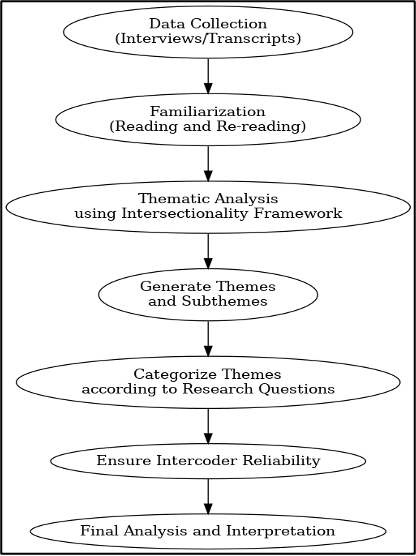
Figure 1. Steps to the data process and analysis to enhance research rigour and trustworthiness, in circles connected with arrows. (Source: authors’ own construct from fieldwork, 2024). The steps read as follows: Data Collection (Interviews/Transcripts), Familiarization (Reading and Re-Reading), Thematic Analysis using Intersectionality Framework, Generate Themes and Subthemes, Categorize Themes according to Research Questions, Ensure Intercoder Reliability, and Final Analysis and Interpretation.
Study Findings
This study aimed to explore the intersectional experiences of discrimination among university students with disabilities at the University of Ghana who also possess other marginalized identities. We set off to examine how different aspects of identity intersect to create unique challenges in higher education, to uncover the compounded barriers faced by students at these intersections and finally to identify how power dynamics and systematic oppression manifest in the experiences of these multiple marginalized students. Our analysis revealed several themes that address these objectives.
Theme 1: Narrative of Hierarchies
A major theme that came up was the narrative of hierarchies. It was found that discrimination and class differences manifested not just from the broader campus community but also from among students with disabilities themselves, creating further intersectional challenges. Cox (2010) refers to this situation as a situation of intra-disability discrimination. Consequently, the types and levels of disabilities such as physical versus intellectual versus sensory impairments determined the level of stigma attached to a person with disability. Some disabilities were viewed as more socially acceptable or “mild” than others.
Theme 2: The Case of the ‘Bourgeoisie and the Proletariat’
Socioeconomic status also emerged as a compounding barrier especially for students from lower-income backgrounds. For students from a working-class family, having a disability compounds economic disadvantages as well as privileges given to you. This situation was glaring as the economic status of a person with disability was depicted in the sort of assistive technologies used, type of campus residence, as well as other campus accommodations afforded them. For instance, a lower-income and blind student lamented: “Whiles some colleagues pick up part-time jobs during vacation to make money, my disability means I can’t work, making it even harder as a student from a poor family to afford the tools I need to learn effectively” (VI-1).
This lack of economic capacity directly hindered academic participation. In contrast, participants from more affluent homes could leverage resources to better accommodate their disabilities:
I am lucky to have a privileged family who can make sure I get access to good healthcare, good assistive technologies and other services for me to be comfortable on campus. For some reasons, I keep adding to the friends I have already. Unlike my fellow disabled colleagues who complain bitterly of the woes they go through with friends, some course mates are fascinated about some of the technologies I use on campus and often associate well with me in order to have access to these tools and software. (PC-1)
This highlights how disabilities do not occur in a vacuum but rather intersect with other identity markers, which creates divergent experiences and exacerbates the plight of students. This corroborates the work of Chatzitheochari & Butler-Rees (2023) that a wealthy student with an intellectual disability faces different barriers than a wealthy student with a physical impairment. It further reveals that the experiences of young people in mainstream school settings show that stigmatization is contingent on social class background, affecting their location within the school (Sriram et al., 2023)
The participant recalled how his disability (as a wheelchair user) compounded with his ethnicity to deny him from marrying a woman whom he thought would have been helpful to him in life:
Obviously, you know how hard it is for us to find someone to love you unconditionally. So, I finally dated a woman whom I thought would help me in my endeavours. We courted for over three years before she finally decided to settle down with me. Unfortunately, she came crying one day that her parents do not agree to our union! Even though I knew it was because of my disability, I was more shocked to hear from her that the parents do not want a northerner (someone from the North of Ghana) for an in-law. This brought me back to stage-one in life… My disability remained my worst fears up until I heard this shocking news. Unfortunately, I still remain without a life partner. (S-1)
As researchers committed to an intersectional framework, we acknowledge the significance of thoroughly analyzing situations where patriarchal ideology and gender-based power dynamics coincide with disability. The male participant’s inclination to marry a lady whom he believed would be advantageous to him in life exemplifies a fundamental patriarchal belief that women are primarily responsible for caring for and assisting disadvantaged men (Moodley & Graham, 2015). In addition, his stated worries on the difficulty of finding a spouse who is prepared to accept his impairment shed light on the interconnectedness of ableism and sexism, which limit the range of potential relationships for disabled men (Garland-Thomson, 2002).
Another major finding that emerged from the qualitative interviews was the profound impact of intersectional oppression and discrimination shaping students’ experiences in higher education. This manifested across multiple participant narratives through what Collins and Bilge (2016) term the “matrix of domination”: the organizing structures, processes, symbols, images, and ideologies that uphold intersecting systems of marginalization. One salient form was gender discrimination entwined with ableism. As a visually impaired woman reflected:
As a lady with a disability, I deal with discrimination based on gender, disability and social status... I have had people especially men who harass me in a kind of a way. Some guys come into relationship with you because they feel you need them and want to be the centre of attraction. (VI-2)
The passage above highlights the denigration and damaging preconceptions that women with disabilities encounter in relationships. The ideas of dependency described express internalized patriarchy and paternalism towards disability (Moodley & Graham, 2015).
The concept of triple jeopardy introduced by Third World Women’s Alliance in the 1970s (cited in Sepic et al., 2023) still holds in the twenty-first century as some female participants described their intersectional oppressions based on their disability, gender, and ethnicity status. Additionally, students across marginalized ethnic and socioeconomic backgrounds described economic barriers tied to acquiring assistive technologies essential for their learning and participation. A low-income, orthopedically impaired student expressed:
I sometimes think that being disabled comes with an expensive lifestyle. You would have to spend more on transport fares compared to the sighted person because you would have to order cars for safety reasons. Some Uber drivers would drive off immediately they see you are disabled because they think you might be a burden on them. Sometimes I have to pay for an Uber just to cross the road to campus. This drains my money. (VI-6)
These stories show how many identity characteristics contribute to the build-up of disadvantages. Individuals at the intersections encountered specific material obstacles related to gender, disability, and class. Generally, the findings revealed how power and bias are ingrained at intersecting points of identity and status (Crenshaw, 1991). To create a sense of belonging for multiply disadvantaged groups within institutions, it is necessary to directly address the sociohistorical factors that contribute to interconnected forms of oppression.
Theme 3: Compounding Challenges in Inclusive Education
On the theme of compounding challenges in inclusive education, the interviews revealed an additional significant discovery: the cumulative obstacles that students with various marginalized identities encounter in programs designed for inclusive education. Although progressive policies have increased access, participants frequently faced extra obstacles due to their overlapping sources of disadvantage.
One area was physical accessibility and mobility supports. As a visually impaired student expressed:
Generally, in Ghana, there are certain facilities and opportunities you cannot enjoy as disabled person and as a lady. I sometimes think that being disabled come with an expensive lifestyle. You would have to spend more on transport fares compared to the sighted person because you would have to order cars for safety reasons. (VI-6)
Her story emphasizes the connection between infrastructure, economy, gender, and disability in limiting participation, particularly due to her rural upbringing.
Additionally, student participants consistently reported social isolation and negative peer treatment at the intersections of impairment, gender, ethnicity, and class backgrounds:
I overheard someone complaining to a sighted friend of mine about why he is wasting time around me because nothing good can come out of our friendship... Others would not want you around them so why do you waste your time around her. (VI-2)
Stigmatizing disability with other minority identities significantly undermines students’ feeling of inclusion, contradicting the essence of diverse and welcoming campus environments. As Mensah et al. (2018) found in Ghana, while strides have expanded participation, holistic inclusion for students facing multiple layers of difference remains an aspiration not yet realized. Dismantling cross-cutting barriers demands intersectional consciousness and action.
Discussion
The findings of this study offer valuable and novel insights into the intersectional experiences of students with disabilities at the University of Ghana, highlighting how various identity markers compound to create unique challenges in higher education. These results align with and extend existing scholarship on intersectionality in educational contexts. By engaging more deeply with each theme and connecting our findings to a broader range of literature, we provide a more comprehensive understanding of the intersectional experiences of students with disabilities in Ghanaian higher education. This analysis not only contributes to the existing body of knowledge but also highlights the need for more varied, intersectional approaches to inclusive education policies and practices.
Theme 1: Narrative of Hierarchies
The emergence of a narrative of hierarchies within the disability community itself echoes Cox’s (2010) concept of intra-disability discrimination. This finding reveals a complex social dynamic where certain disabilities are perceived as more socially acceptable or “mild” than others, creating additional layers of marginalization within an already marginalized group. This internal stratification demonstrates the varied nature of disability experiences and challenges simplistic notions of disability as a homogenous category.
While intra-disability discrimination has been noted in Western contexts (Cox, 2010), our findings highlight how this phenomenon manifests uniquely in Ghana. This illustrates how hierarchy intersects with other identity markers such as socioeconomic status and ethnicity in the Ghanaian context. For instance, the experiences of visually impaired students from lower-income backgrounds (VI-1) contrast sharply with those from more affluent families (PC-1), highlighting how economic privilege can mitigate some of the challenges associated with disability while economic disadvantage exacerbates them. This aligns with Chatzitheochari & Butler-Rees’s (2023) work on the intersection of disability and social class in educational settings.
Theme 2: The Case of the ‘Bourgeoisie and the Proletariat’
This theme underscores the critical role of socioeconomic status in shaping the experiences of students with disabilities. Our findings resonate with recent research by Burns et al. (2023), who emphasize the intersectionality of place and gender among disabled individuals in Ghana. The stark contrast in experiences between students from different economic backgrounds, particularly in access to assistive technologies and support services, highlights the need for more nuanced approaches to inclusive education that consider these economic disparities.
Furthermore, the experiences shared by participants like VI-6 regarding transportation challenges align with Gbagbo et al.’s (2023) work on the multiple barriers faced by students with disabilities in Ghanaian universities. These findings collectively call for a more holistic approach to inclusive education that addresses not only physical accessibility but also economic accessibility.
Theme 3: Compounding Challenges in Inclusive Education
The compounded challenges faced by students with intersecting marginalized identities in inclusive education programs align with Evans’s (2019) research on the insufficiency of singular initiatives around disability, gender, or class in accounting for their intersections. Our findings extend this work by providing specific examples from the Ghanaian context, such as the experiences of visually impaired female students (VI-2) facing both gender-based discrimination and disability-related challenges.
These results support and extend Collins and Bilge’s (2016) concept of the matrix of domination in higher education contexts. The intersecting systems of marginalization based on disability, gender, ethnicity, and socioeconomic status create a complex web of disadvantage that cannot be adequately addressed through single-axis approaches to inclusion and equity. This is further supported by Bennett (2020) and Goriss-Hunter et al. (2023), who highlight how social divisions around race, gender, ability status, and class synergistically disadvantage individuals at certain identity intersections.
Our study’s revelation of the limitations of current disability services and support systems in addressing the needs of students with intersecting marginalized identities calls for a fundamental shift in how disability and inclusion are conceptualized and addressed in higher education settings, particularly in the Ghanaian context. This aligns with Gabel & Miskovic's (2014) call for a critical examination of environments, knowledge constructions, and power relations that allow inequities to persist amid diversity efforts.
Practical implications of these findings include the need for allocating funds to provide loaned assistive devices, ensuring their proper maintenance and availability to all students in need, and developing gender-sensitive transportation alternatives to support participation rights across economic and gender boundaries. Incorporating disability cultural competency training throughout the curricula and promoting student-led intersectional disability organizing may enhance inclusiveness and empower leadership. Furthermore, universities should consider developing targeted financial aid programs for disabled students from low-income backgrounds to address compounded economic challenges. Regular audits of physical and digital infrastructure should also be conducted to ensure accessibility for students with various disabilities and backgrounds, considering the intersectional nature of their experiences. Thus, this study contributes to the growing body of intersectional research in higher education, providing contextually rich insights that can inform more equitable and inclusive policies and practices. It underscores the critical importance of adopting an intersectional perspective in addressing the complex challenges faced by students with disabilities in higher education.
Limitations and Future Directions
As researchers, we recognize the constraints of this preliminary study, which was limited to a single public university in Ghana and had a small sample size focused on depth rather than breadth. This limited geographical scope constrains the generalizability of our findings. Future research should expand to multiple institutions across various regions in Ghana and beyond, to capture a more comprehensive picture of intersectional experiences in higher education. Although valuable insights were obtained, future research should broaden its focus to include private institutions and other areas to encompass a wider range of diversity across disability types, gender identities, faiths, and stakeholder positions such as academics and administrators. We also acknowledge the potential for researcher bias in interpreting intersectional experiences. Future studies could employ mixed methods approaches, combining qualitative insights with quantitative data to triangulate findings and enhance validity.
There is a need to be more intentional about applying an intersectional, critical disability lens that systematically examines how ableism intersects with patriarchal, racist, tribalistic, and classist ideologies within the university context in future works. Such work may carefully quantify the positionality of male participants within these gendered systems of power to avoid inadvertently reinforcing masculine privileges. Additionally, longitudinal studies tracking how intersectional experiences of disabled students change over their academic careers would provide valuable insights into the dynamic nature of these challenges. Future research should also include perspectives from faculty and administrators to offer a more comprehensive view of institutional challenges and opportunities for change.
Conclusion and Recommendation
In conclusion, this study utilized an intersectional framework and multi-methods qualitative approach to explore experiences of discrimination among university students in Ghana possessing both disabilities and other marginalized identities across socioeconomic status, gender, and ethnic lines. Through in-depth interviews, key findings revealed how overlapping systems of oppression around disability, class, ethnicity and gender synergistically disadvantage these students – compromising access, affordability, social relationships, and overall inclusion within contexts aimed at furthering participation rights. Despite progressive policy efforts, persisting gaps at intersecting locations of identity expose limits of current structures and supports to fully capture multilayered barriers facing the most vulnerable. Findings compel deeper interrogation of environments, knowledge constructions and power relations that allow inequities to endure amid diversity efforts in Ghanaian higher education.
Based on the findings from the data collected, we recommend that the university adopts a deliberate, intersectional strategy that surpasses individual adjustments for specific issues to truly enhance inclusive education. There is the need to enhance intersectional disability cultural competency through enhanced training for staff, lecturers, and students to challenge ableism in conjunction with other related biases such as gender, ethnicity, socioeconomic status and others. It is recommended to approach legislation, resource allocation, physical accessibility, and support services using an intersectional equity lens to identify disparities in the individuals who can truly benefit from disability inclusion initiatives.
References
- Amjad, Z., Salahuddin, A., & Shaukat, R. (2023). Nexus of gender and disability: An intersectional study on shaping lives of university students. UMT Education Review, 6(1), 1–24.
- Anderson, E. (2023). Moving the needle on ableism: From higher education access to inclusion. Critical Perspectives in Education & Policy, 1(1), 54–64.
- Asamoah, E., Amaniampong, E. M., Manful, E., Gyasi-Boadu, N., & Koomson-Yalley, E. N. M. (2023). Using photovoice to illuminate challenges facing children with disabilities in inclusive education in Ghana. Social Work & Social Sciences Review, 24(1), 7–28.
- Awinpoka Akurugu, C. (2021). Gender performativity in rural northern Ghana: Implications for transnational feminist theorising. Feminist Theory, 22(1), 43–62.
- Baker, L. A. (2019). Normalizing Marginality: A Critical Analysis of Blackness and Disability in Higher Education. Toronto: University of Toronto Press.
- Beach, D., & Sernhede, O. (2011). From learning to labour to learning for marginality: School segregation and marginalization in Swedish suburbs. British Journal of Sociology of Education, 32(2), 257–274.
- Bennett, D. (2020). Five years later: Assessing the implementation of the four priorities of the Sendai framework for inclusion of people with disabilities. International Journal of Disaster Risk Science, 11, 155–166.
- Bešić, E. (2020). Intersectionality: A pathway towards inclusive education? Prospects, 49(3), 111–122.
- Brehaut, J. C., & Kohen, D. E. (2016). Complexity as a continuum of many health‐related challenges. Developmental Medicine & Child Neurology, 58(11), 1099–1099.
- Burns, S. D., Best, L. E., & Amoatey, S. (2023). Exploring the intersectionality of place and gender among older adults in Ghana: An examination of women’s disability disadvantage. Innovation in Aging, 8(4), 134.
- Chatzitheochari, S., & Butler-Rees, A. (2023). Disability, social class and stigma: an intersectional analysis of disabled young people’s school experiences. Sociology, 57(5), 1156–1174.
- Collins, P. H., & Bilge, S. (2016). Intersectionality. London: Polity Press.
- Cox, J. (2010). Disability stigma and intraclass discrimination. Florida Law Review, 62, 429.
- Crenshaw, K. (1989). Demarginalizing the intersection of race and sex: A Black Feminist critique of antidiscrimination doctrine, Feminist theory and antiracist politics. University of Chicago Legal Forum, 1989(1), 139–167.
- Crenshaw, K. W. (1991). Mapping the margins: Intersectionality, identity politics, and violence against women of color. Stanford Law Review, 43(6), 1241–1299. https://doi.org/10.2307/1229039
- Evans, C. R. (2019). Adding interactions to models of intersectional health inequalities: comparing multilevel and conventional methods. Social Science & Medicine, 221, 95–105.
- Gabel, S. L., & Miskovic, M. (2014). Discourse and the containment of disability in higher education: An institutional analysis. Disability & Society, 29(7), 1145–1158. https://doi.org/10.1080/09687599.2014.910109
- Garland-Thomson, R. (2002). The politics of staring: Visual rhetorics of disability in popular photography. In S. L. Snyder, B. J. Brueggemann & R. G. Thomson (Eds.), Disability Studies: Enabling the Humanities, Vol 1 (pp. 56–75). New York: Modern Language Association.
- Gbagbo, F. Y., Rockson, G. N. Y., Quansah, F., & Ameyaw, E. K. (2023). Sexual coercion and harassment of students with disabilities in a public university in Ghana. Journal of Sex & Marital Therapy, 49(7), 1–18.
- Goriss-Hunter, A., Archer, V., & Arvanitakis, J. (2023). Identity and intersectional responsive pedagogy in higher education: Insights from two locations in regional and urban Australia. In S. Weuffen, J. Burke, M. Plunkett, A. Goriss-Hunter & S. Emmett (Eds.), Inclusion, Equity, Diversity, and Social Justice in Education: A Critical Exploration of the Sustainable Development Goals (pp. 181–196). Singapore: Springer Nature.
- Hall, M. C. (2019). Critical disability theory. Stanford Encyclopaedia of Philosophy. https://plato.stanford.edu/entries/disability-critical/
- Hussain, M. M. (2023). The policy efforts to address racism and discrimination in higher education institutions: the case of Canada. Center for Educational Policy Studies Journal, 13(2), 9–29.
- Ingham, E. (2018). Attitudes towards disability in society viewed through the lens of critical disability theory: An analysis of Me Before You. Counselling Psychology Review, 33(1), 2–12.
- Jacob, U. S., Pillay, J., Adeoye, O. E., & Oni, T. K. (2023). Barriers to employment of people with intellectual disability. Work, 74(1), 207–218.
- Khuder, B., & Petrić, B. (2023). Intersectionality of marginalisation: EAL academics in exile writing for international publication. Journal of Multilingual and Multicultural Development, 1–14. https://doi.org/10.1080/01434632.2023.2170387
- Killen, M., & Rutland, A. (2022). Promoting fair and just school environments: Developing inclusive youth. Policy Insights from the Behavioral and Brain Sciences, 9(1), 81–89.
- Kissi, E. (2018). Sankofa: The Critical Nkrumahist Theory. Journal of Pan African Studies, 12(7), 154–175.
- Mensah, A. M., Duku, N., Darkwa, J. K., Baidoo, E. A., Cobbold, C., Boafo, Y. A., & Kimani, C. W. (2018). Approaching universal disability access: Understanding challenges and issues in implementing inclusive education in Ghana. Disability, CBR and Inclusive Development, 29(4), 5–22. https://doi.org/10.5463/dcid.v29i4.771
- Messiou, K. (2019). Understanding marginalisation through dialogue: A strategy for promoting the inclusion of all students in schools. Educational Review, 71(3), 306–317.
- Moodley, J., & Graham, L. (2015). The importance of intersectionality in disability and gender studies. Agenda, 29(2), 24–33.
- Mutanga, O., & Walker, M. (2017). Exploration of the academic lives of students with disabilities at South African universities: Lecturers’ perspectives. African Journal of Disability, 6(1), 1–9.
- Nichols, S., & Stahl, G. (2019). Intersectionality in higher education research: A systematic literature review. Higher Education Research & Development, 38(6), 1255–1268.
- Ndlovu, S. (2019). Access into professional degrees by students with disabilities in South African higher learning: A decolonial perspective. African Journal of Disability, 8(1), 1–12.
- Pincock, K., Jones, N., & Bani Odeh, K. (2023). ‘Had I been a girl it would have been a big problem’: An intersectional approach to the social exclusion of refugee adolescents with disabilities in Jordan. Childhood, 30(2), 129–144.
- Sepic, J., Rabinovich, A. B., Medvedev, I., & Thomson, R. E. (2023). Triple jeopardy: The Tonga tsunami, a storm surge, and a meteotsunami simultaneously hit the US East Coast on 16-17 January 2022. EGU General Assembly. https://doi.org/10.5194/egusphere-egu23-11778
- Simatele, M. (2022). The intersection of social inequities and marginalization in education: Towards a praxis. In C. Cho & J. Corkett (Eds.), Global Perspectives on Microaggressions in Higher Education (pp. 105–124). New York: Routledge.
- Sriram, B., Seng, T. J., & David, L. G. X. Common physical health issues in persons with intellectual disability. The Singapore Family Physician, 48(6), 14–23.
- Walton, E. (2022). Disability studies in education and intersectionality. In R. J. Tierney, F. Rizvi & K. Ercika (Eds.), International Encyclopaedia of Education, Fourth Edition (pp. 249–258). Amsterdam: Elsevier.